

From Sputnik to Chandrayaan: How Humans Reached Space


On the evening of 4 October 1957 a polished metal ball the size of a beach ball began to circle the Earth, beeping. It frightened governments, thrilled schoolchildren and started the Space Age. Just over sixty years later, an Indian lander touched down near the Moon’s south pole. This guide explains the physics that makes spaceflight possible, the race between two superpowers, and the story of India’s own space programme, with a rocket equation you can play with.
| First satellite | Sputnik 1, USSR, 4 October 1957 |
| First human in space | Yuri Gagarin, 12 April 1961 |
| First Moon landing | Apollo 11, 20 July 1969 |
| India’s first satellite | Aryabhata, 19 April 1975 |
| ISRO founded | 1969 |
| India on the Moon | Chandrayaan-3 landing, 23 August 2023 |
| Reading time | 10 min read |
The physics: why getting to orbit is so hard
A rocket works by Newton’s third law: throw mass backwards at high speed, and the rocket goes forward. The problem is that to stay in orbit you must not just go up, you must go sideways very fast. Low Earth orbit needs a speed of about 7.8 kilometres per second, roughly 28,000 km/h. Once you are moving that fast, you are falling around the Earth, continually missing it.
Adding the speed lost to gravity and air drag during the climb, a rocket needs a total velocity change (delta-v) of about 9.4 kilometres per second to reach low Earth orbit. In 1903 the Russian schoolteacher Konstantin Tsiolkovsky wrote the equation that links delta-v to how fast the exhaust leaves the engine and how much of the rocket’s mass is fuel.
Try it: the rocket equation
Tsiolkovsky’s equation says delta-v equals the exhaust velocity times the natural logarithm of the mass ratio, which is the full rocket’s mass divided by its empty mass. Drag the sliders and see whether your rocket gets to orbit.
The rocket equation in Python
import math

exhaust_velocity = 3000      # m/s, roughly a kerosene and oxygen engine
delta_v_orbit = 9400         # m/s, to reach low Earth orbit including losses

mass_ratio = math.exp(delta_v_orbit / exhaust_velocity)   # Tsiolkovsky rocket equation
propellant_share = 1 - 1 / mass_ratio

print(f"Mass ratio needed: {mass_ratio:.1f} (full rocket vs empty rocket)")
print(f"Share of lift-off mass that must be propellant: {propellant_share * 100:.0f}%")
Output:
Mass ratio needed: 23.0 (full rocket vs empty rocket)
Share of lift-off mass that must be propellant: 96%
That is why rockets look like giant fuel tanks with a tiny payload on top. It is also why engineers use staging: dropping empty tanks along the way so that the engines do not have to carry dead weight to orbit.
Lift-off
Engines produce more thrust than the rocket weighs, and it climbs straight up to get through the thickest air quickly.
Pitch over
The rocket tilts toward the horizon, because orbit needs sideways speed.
Max-Q
Around a minute in, the air pressure on the rocket peaks and engines may throttle down briefly.
Stage separation
The empty first stage drops away, and a smaller second stage fires in thin air.
Orbit insertion
The second stage cuts off at the right speed and height, and the payload separates and coasts around the Earth.
The Space Race
Sputnik 1 weighed about 84 kilograms and carried little more than a radio transmitter, but its beeps could be heard by radio amateurs everywhere. It orbited for about three months before burning up. A month later Sputnik 2 carried a dog, Laika, into orbit. In the United States the shock led to the creation of NASA in 1958. Explorer 1, launched in January 1958, discovered the Van Allen radiation belts.
The Soviet Union scored another first when Yuri Gagarin orbited the Earth in April 1961. In May 1961 President John F. Kennedy committed the United States to landing a person on the Moon before the decade was out. On 20 July 1969, Neil Armstrong and Buzz Aldrin did it, while Michael Collins orbited overhead in Apollo 11. NASA’s Apollo missions continued until 1972.
1903: Tsiolkovsky’s equation
The mathematical foundation of rocketry is published.
1926: First liquid-fuel rocket
Robert Goddard launches the first liquid-propellant rocket in the United States.
1957: Sputnik 1
The first artificial satellite starts the Space Age.
1961: Gagarin
Yuri Gagarin is the first person in space and orbit.
1969: Apollo 11
Armstrong and Aldrin walk on the Moon; ISRO is founded the same year.
1975: Aryabhata
India’s first satellite is launched on a Soviet rocket.
1981-2011: Space Shuttle
A reusable winged orbiter flies 135 missions.
2000: ISS crewed
People have lived aboard the International Space Station continuously since November 2000.
2014: Mangalyaan
India enters Mars orbit on its first attempt.
2015: Booster landing
SpaceX lands a Falcon 9 first stage, starting the era of reusable orbital rockets.
2023: Chandrayaan-3
India’s lander touches down near the Moon’s south pole.
India’s space story
India’s space programme began in the 1960s under Vikram Sarabhai, who argued that space technology should serve development: communications, weather forecasting and mapping. The Indian Space Research Organisation (ISRO) was formed in 1969. Its first satellite, Aryabhata, named after the ancient astronomer, was launched on 19 April 1975 on a Soviet rocket. India’s own Satellite Launch Vehicle, SLV-3, put the Rohini satellite into orbit in 1980.
- PSLV: the workhorse rocket. In February 2017 a single PSLV launched 104 satellites, a record at the time.
- Chandrayaan-1 (2008): India’s first Moon mission carried instruments that helped detect signs of water molecules on the lunar surface.
- Mangalyaan (2014): the Mars Orbiter Mission reached Mars orbit on its first attempt, at a notably low cost.
- Chandrayaan-3 (2023): the lander touched down on 23 August 2023 near the Moon’s south pole, making India the fourth country to soft-land on the Moon and the first to do so near that pole.
- Aditya-L1 (2023): India’s first mission to study the Sun from a point about 1.5 million km from Earth.
- Human spaceflight: in 2025 Group Captain Shubhanshu Shukla became the first Indian to visit the International Space Station, on the Axiom-4 mission, while ISRO continues to prepare its own Gaganyaan crewed programme.
In 1984 Rakesh Sharma had become the first Indian in space aboard a Soviet Soyuz mission. India’s space economy is now opening to private companies, and our guide to the compass and navigation shows how satellite systems such as NavIC build on the same technology.
Mind map: space flight at a glance
- Space flight: From a beeping sphere to Moon and Mars missions.
- The physics: Why rockets work.
- Newton’s third law: Throw mass back, move forward.
- Rocket equation, 1903: Tsiolkovsky links speed to mass ratio.
- Staging: Drop empty tanks to go faster.
- Orbital speed: About 7.8 km/s sideways, not just up.
- Space Race: 1957 to 1969.
- Sputnik, 1957: First satellite.
- Laika, 1957: First animal in orbit.
- Gagarin, 1961: First human in space.
- Apollo 11, 1969: First Moon landing.
- Living in space: Stations and shuttles.
- Space Shuttle: Reusable orbiter, 1981 to 2011.
- ISS: Continuously crewed since 2000.
- Reuse and new players: 2010s onwards.
- Falcon 9 landings: Boosters return from 2015.
- Private launchers: Commercial crews and cargo.
- Small satellites: Cheap access to orbit.
- India: ISRO since 1969.
- Aryabhata, 1975: First Indian satellite.
- PSLV record, 2017: 104 satellites in one launch.
- Chandrayaan-1, 2008: Detects lunar water signs.
- Mangalyaan, 2014: Mars on the first attempt.
- Chandrayaan-3, 2023: Lands near the Moon’s south pole.
- Aditya-L1, 2023: Solar observatory.
- The physics: Why rockets work.
Common myths
- Myth: Astronauts float because there is no gravity. Gravity is still strong in orbit; they float because they are in continuous free fall.
- Myth: Rockets just need to go high. The hard part is going fast sideways.
- Myth: Space is just a short hop up. The Karman line is 100 km up, about the distance of a long drive, but orbit needs enormous speed.
- Myth: The Space Race ended with Apollo. It shifted to stations, satellites and cooperation, and now to many nations and companies.
Key takeaways
- Orbit is about speed: roughly 7.8 km/s sideways, and about 9.4 km/s of total delta-v from the ground.
- Tsiolkovsky’s equation explains why rockets are mostly fuel and why staging helps.
- Sputnik (1957) to Apollo 11 (1969) took just twelve years.
- India’s programme focuses on useful, low-cost missions, from Aryabhata to Mangalyaan and Chandrayaan-3.
Frequently asked questions
How high is space?
By convention, space begins at the Karman line, 100 km above sea level.
Why do rockets launch toward the east?
Earth spins eastward, giving a launch a free speed boost, which is largest near the equator.
Why does India launch from Sriharikota?
It is on India’s east coast, close to the equator, and launching eastward over the sea keeps populated areas safe.
What is a lagrange point?
A position in space where the pull of two large bodies balances, such as the Sun-Earth point L1 where Aditya-L1 operates.
Keep exploring
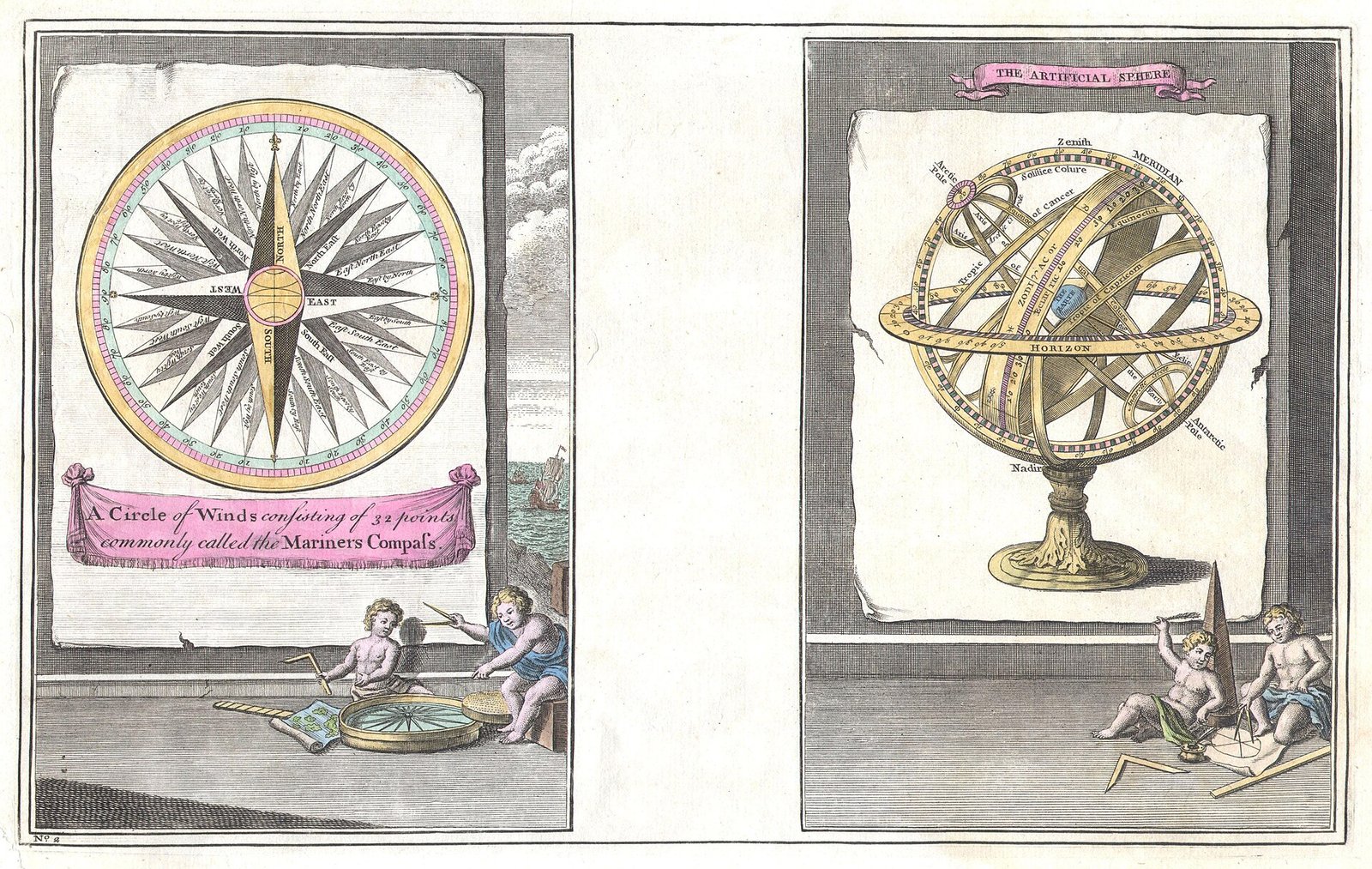
Navigation, from needles to satellites.Artificial intelligence
The software on modern spacecraft.The solar cell
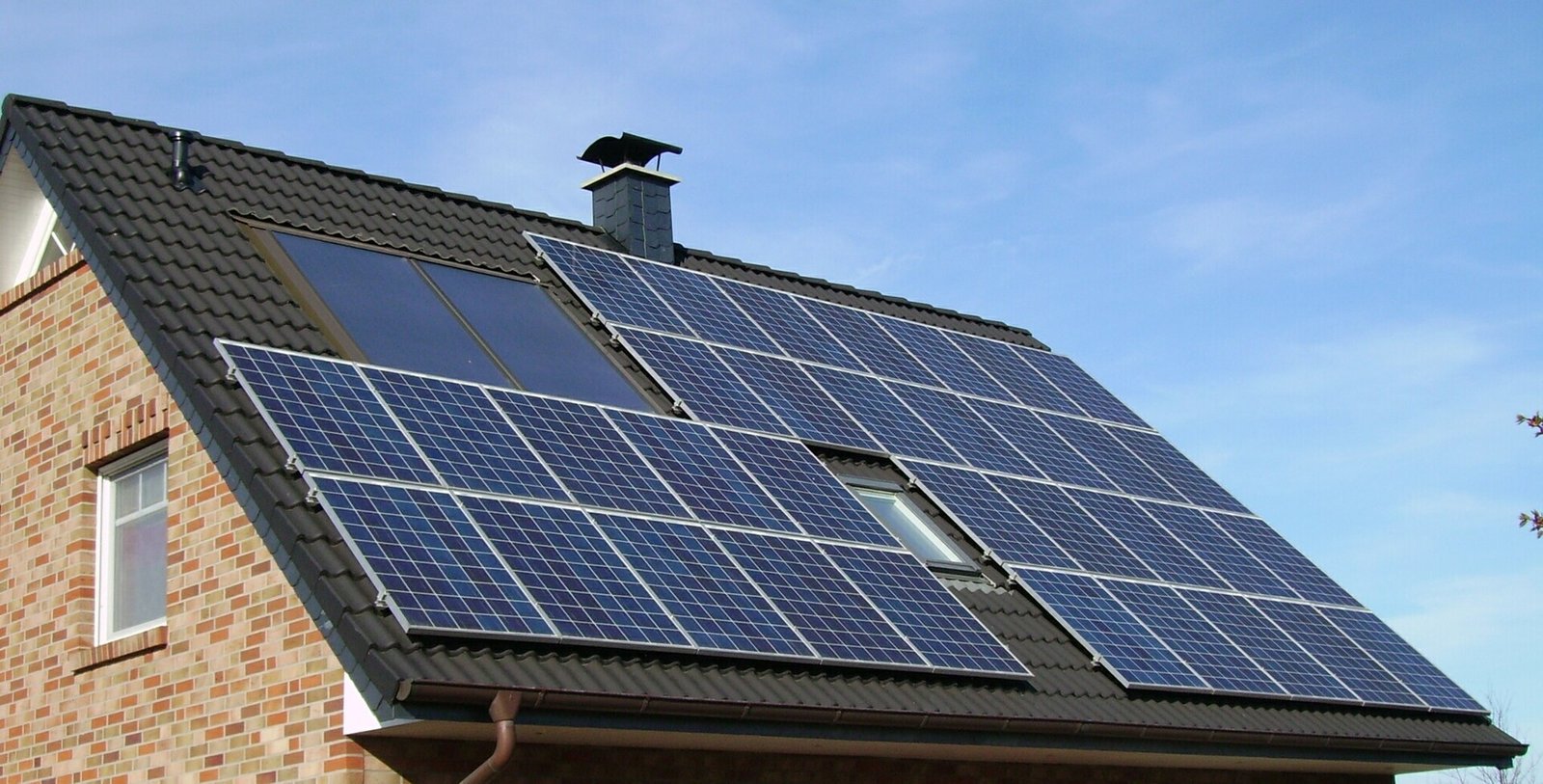
Born from the space programme’s need for power.
Sources
- Sputnik and the origins of the Space Race, NASA
- Aryabhata, Indian Space Research Organisation
- LVM3-M4 / Chandrayaan-3 mission brochure, Indian Space Research Organisation
- Shubhanshu Shukla: India brims with pride as first astronaut blasts off to International Space Station, CNN
Featured image: Image: U.S. Air Force photo, via Wikimedia Commons, Public domain. Embedded video from YouTube. Dates and figures are rounded.


1 Comment
[…] Satellites: Power in orbit. […]