
Penicillin: How a Mould Became the First Antibiotic

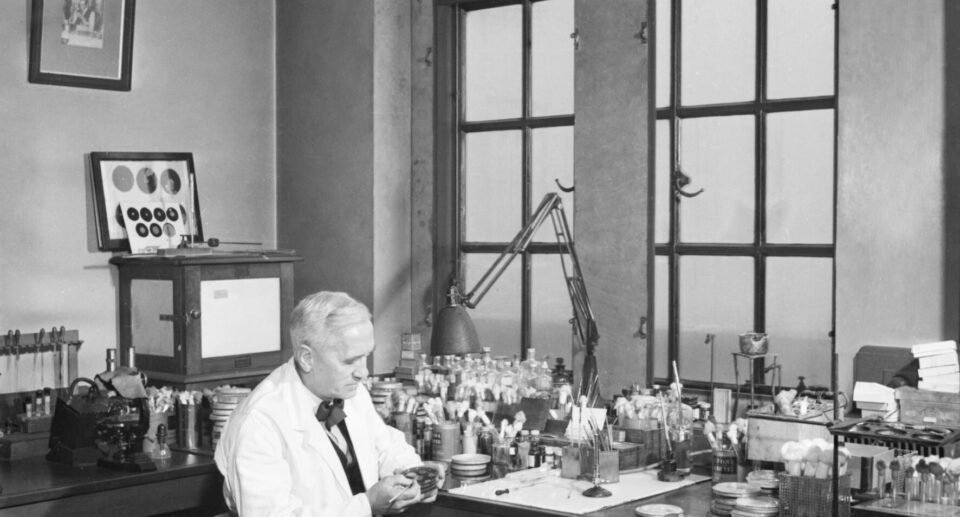
In 1900 a scratch from a rose thorn could kill you. Infected wounds, pneumonia, blood poisoning and childbirth fever were ordinary causes of death, and doctors could do little about them. Then a mould drifted onto a laboratory dish, a curious scientist noticed, and a team in Oxford turned an unstable mould juice into a drug. This guide tells the whole story: the chance observation, the years of hard chemistry, the wartime factories, the way penicillin actually works, and the resistance problem that follows every antibiotic.
| Discovered by | Alexander Fleming, St Mary’s Hospital, London, 1928 |
| Turned into a drug by | Howard Florey, Ernst Chain and Norman Heatley, Oxford, 1939 to 1941 |
| Mass-produced | USA and UK, 1942 to 1944 |
| Source organism | Penicillium mould |
| How it works | Stops bacteria building their cell walls |
| Nobel Prize | 1945 (Fleming, Florey, Chain) |
| Big challenge today | Antibiotic resistance |
| Reading time | 10 min read |
This guide is general education, not medical advice. Antibiotics only work on bacteria, not viruses. Use them only as a doctor prescribes.
Life before antibiotics
Before the 1940s, bacterial infections were deadly because doctors had few effective drugs. Soldiers in the First World War often died of infected wounds rather than the injuries themselves. Pneumonia, scarlet fever, meningitis and blood poisoning killed children and adults. Surgery was risky because infection could follow any operation, and giving birth carried the danger of puerperal fever. The best tools were cleanliness, rest, and hoping the patient’s own body would win.
The accident that was not quite an accident
In September 1928 the Scottish bacteriologist Alexander Fleming returned to St Mary’s Hospital in London after a holiday. He had been studying Staphylococcus bacteria, and a culture dish left on his bench had been contaminated by a mould. Around the mould, the bacteria had disappeared, leaving a clear ring.
Plenty of researchers might have thrown the dish away. Fleming looked closer. He grew more of the mould, identified it as a Penicillium, and found that the liquid it produced killed many kinds of bacteria. In 1929 he published his findings and called the active substance penicillin.
Luck mattered, since mould spores landed in the right place at the right time, but Fleming’s training mattered too. Fleming had already discovered lysozyme, an antibacterial substance in tears, and he was primed to notice a substance that kills bacteria. He did not manage to purify penicillin, though, and it broke down quickly. For a decade it remained a laboratory curiosity.
How penicillin works
Bacteria are surrounded by a tough cell wall that stops them bursting under their own internal pressure. The wall is built from a mesh of sugar and protein chains that must be cross-linked as the cell grows. Penicillin contains a four-membered ring of atoms, the beta-lactam ring, which jams the enzymes that do this cross-linking.
A growing cell builds new wall
To divide, the bacterium adds new strands to its wall and links them with enzymes called penicillin-binding proteins.
Penicillin arrives
The beta-lactam ring in penicillin looks like part of the wall’s building blocks, so the enzyme grabs it by mistake.
The enzyme is blocked
Once bound, the enzyme cannot finish its job. The wall is left with gaps.
The cell bursts
Water rushes in through the weakened wall, and the bacterium bursts.
Human cells are safe
Human cells have no cell wall and no such enzymes, which is why penicillin can be given at doses that kill bacteria but spare us.
Turning mould juice into a medicine
In the late 1930s, at the University of Oxford, Howard Florey (an Australian pathologist) led a team that included the biochemist Ernst Chain and the technician Norman Heatley. They set out to purify penicillin and test whether it worked in animals. Heatley devised ways to extract the fragile substance from the mould broth, using different solvents and changes in acidity. In 1940 they tested it on mice infected with a deadly dose of streptococci: the treated mice lived, and the untreated ones died.
In early 1941 they gave penicillin to a human patient, Albert Alexander, a policeman suffering from a severe infection. He improved dramatically, but the team did not have enough drug to finish the treatment, and he died. The lesson was clear: penicillin worked, but it had to be made in vastly greater quantities.
Mass production in wartime
With Britain at war and its industry under pressure, Florey and Heatley travelled to the United States in 1941 to interest American laboratories. At the US Department of Agriculture lab in Peoria, Illinois, scientists found that growing the mould in deep tanks, with corn steep liquor as food, gave far higher yields. A laboratory worker known as “Moldy Mary” brought in a rotting cantaloupe in 1943, and its mould, Penicillium chrysogenum, proved to produce much more penicillin than Fleming’s original strain. Further selection and mutation raised yields again.
By D-Day in June 1944 there was enough penicillin to treat Allied wounded. A drug that had been a few precious grams in 1941 was being manufactured by the kilogram. In 1945 Fleming, Florey and Chain shared the Nobel Prize in Physiology or Medicine. The same year, Dorothy Hodgkin worked out the molecular structure of penicillin, a step that later allowed chemists to make new variants.
1928: Fleming’s observation
A mould contaminates a staphylococcus plate at St Mary’s Hospital, and the bacteria around it are killed.
1929: First publication
Fleming reports the finding and names the active substance penicillin.
1939-40: Oxford team
Florey, Chain and Heatley purify penicillin and show it cures infected mice.
1941: First human patient
A policeman at Oxford improves on penicillin but dies when supplies run out.
1943: Better mould and big tanks
A new strain found on a cantaloupe and deep-tank fermentation sharply increase output.
1944: D-Day
Enough penicillin is available to treat Allied wounded.
1945: Nobel Prize
Fleming, Florey and Chain share the prize; Dorothy Hodgkin determines the structure.
1954: India’s first antibiotics factory
Hindustan Antibiotics Limited is established at Pimpri, Pune, to make penicillin.
1959: Methicillin
A new penicillin designed to beat resistant staphylococci is introduced; resistance soon follows.
Try it: how fast bacteria multiply
One reason infections are dangerous is that bacteria multiply by doubling. In good conditions, some bacteria divide every 20 minutes or so. Drag the slider to see what exponential growth does.
Resistance: a toy model in Python
Any large population of bacteria contains a few cells that happen to be resistant. When a drug kills the susceptible majority, the resistant few take over. This toy model shows how quickly that happens. It is a simplification, not a clinical prediction.
resistant = 1e-6          # fraction of bacteria already resistant
kill_susceptible = 0.999  # share of susceptible bacteria killed per course

for course in range(0, 5):
    print(f"After {course} courses: {resistant * 100:9.4f}% resistant")
    survivors_susceptible = (1 - resistant) * (1 - kill_susceptible)
    resistant = resistant / (resistant + survivors_susceptible)
Output:
After 0 courses:    0.0001% resistant
After 1 courses:    0.0999% resistant
After 2 courses:   50.0000% resistant
After 3 courses:   99.9001% resistant
After 4 courses: 99.9999% resistantThe lesson is selection: each course of treatment kills the weak and leaves the strong. In real life the dynamics are more complex, with mutation, gene swapping between bacteria and the patient’s own immune system, but the direction is the same. Fleming himself warned in 1945 that using too little penicillin could teach bacteria to resist it.
Penicillin in India
India set up its first large-scale antibiotics factory soon after independence. Hindustan Antibiotics Limited was established at Pimpri near Pune on 10 March 1954, and the plant was commissioned in 1955-56. It was India’s first manufacturer to make antibiotics, including penicillin and streptomycin, on a commercial scale. The company has struggled financially since the 1990s, but it marked the start of an Indian pharmaceutical industry that is now among the world’s largest suppliers of generic medicines.
Today India also faces a heavy burden of resistant infections. Antibiotics are widely used, and in some places they are bought without prescription. India published a National Action Plan on antimicrobial resistance in 2017, and regulators mark many prescription-only antibiotics with a red line on the packaging so that buyers know not to take them without medical advice. Doctors and public-health experts keep stressing one message: use the right drug, at the right dose, only when needed.
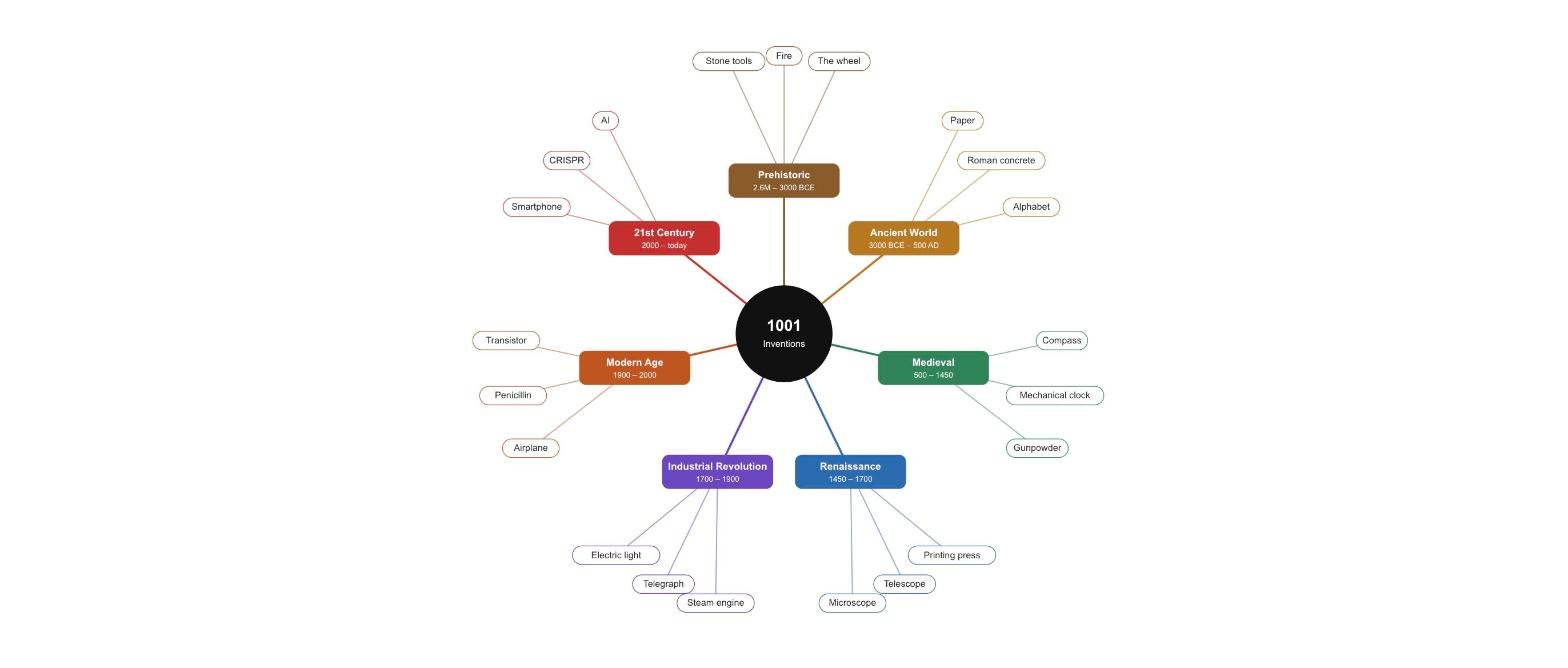
Mind map: penicillin at a glance
- Penicillin: From a contaminated dish to the first mass-produced antibiotic.
- Before antibiotics: Infection was a leading killer.
- Infected wounds: Small cuts could turn deadly.
- Pneumonia and sepsis: Few treatments existed.
- Childbirth fever: A major risk for mothers.
- Discovery, 1928: Alexander Fleming, London.
- The Petri dish: Mould clears bacteria around it.
- Penicillium mould: He names the active agent penicillin in 1929.
- A dead end: Hard to purify, so he moves on.
- Making it work: Oxford, 1939 to 1941.
- Howard Florey: Leads the Oxford team.
- Ernst Chain: Biochemist who purifies it.
- Norman Heatley: Builds the extraction methods.
- First patient, 1941: Improves, but supplies run out.
- Mass production: USA and UK, 1941 to 1944.
- Peoria laboratory: Deep-tank fermentation.
- Moldy Mary: A cantaloupe strain makes far more.
- D-Day, 1944: Enough for Allied wounded.
- How it works: Targets bacterial cell walls.
- Beta-lactam ring: The part that does the damage.
- Blocks wall building: Bacteria burst as they grow.
- Humans unaffected: Our cells have no cell walls.
- Resistance: The ongoing problem.
- Selection: Survivors pass on resistance.
- MRSA: Resistant Staphylococcus.
- Stewardship: Use antibiotics wisely.
- Before antibiotics: Infection was a leading killer.
Common myths
- Myth: Fleming made penicillin into a drug. He discovered it; the Oxford team and American factories made it usable.
- Myth: It was pure accident. Chance played a part, but Fleming’s alert eye and earlier work mattered.
- Myth: Antibiotics treat colds and flu. Those are viral infections, and antibiotics do not act on viruses.
- Myth: Resistance means your body is resistant. It is the bacteria that become resistant, not you.
Key takeaways
- Penicillin works by blocking the building of bacterial cell walls, which human cells do not have.
- Fleming noticed it in 1928; Florey, Chain and Heatley made it into a medicine, and wartime industry made it widely available.
- Bacteria multiply fast, and treatment selects the resistant survivors, so antibiotics must be used carefully.
- India’s Hindustan Antibiotics, founded in 1954, started the country’s antibiotics industry.
Frequently asked questions
Can antibiotics treat a cold?
No. Colds are caused by viruses, and antibiotics work only on bacteria. Taking them unnecessarily adds to resistance.
Why did it take ten years to turn Fleming’s discovery into a drug?
Penicillin was unstable and hard to purify, and only tiny amounts could be made. It took a team of chemists and, later, industrial fermentation to produce it at scale.
What is a superbug?
A superbug is a bacterium that resists many antibiotics, such as methicillin-resistant Staphylococcus aureus (MRSA).
Are penicillin allergies real?
Yes. Some people have allergic reactions to penicillin, which can be serious. Anyone who thinks they are allergic should speak to a doctor.
Keep exploring
Another way medicine fights infection.How steam power built the modern world
The industrial era that made large-scale production possible.Mind map of all inventions
See where penicillin fits.
Sources
- Penicillin, Encyclopaedia Britannica
- Alexander Fleming, Encyclopaedia Britannica
- Antibiotic, Encyclopaedia Britannica
- Sir Alexander Fleming: facts, Nobel Prize Outreach
- Sir Howard Florey: facts, Nobel Prize Outreach
- Hindustan Antibiotics Limited, Department of Pharmaceuticals, Government of India
- Antimicrobial resistance, World Health Organization
Featured image: Image: Ministry of Information Photo Division Photographer, via Wikimedia Commons, Public domain. This guide is for general education and is not medical advice.



2 Comments
[…] PenicillinThe other great medical revolution.The invention of agricultureWhere crowded settlements and epidemics began.Mind map of all inventionsSee the whole story in one map. […]
[…] Penicillin: Discovered in 1928; the first antibiotic. […]