
Gunpowder: From Chinese Alchemy to the Battlefields of the World

Gunpowder began as a failed attempt to make medicine that never dies. Within a few centuries it had changed how wars were fought, how castles were built, and how empires rose and fell, from Song-dynasty China to Mughal India. This guide follows it step by step: where it came from, how it spread, what it did at Panipat in 1526, and how Indian engineers in Mysore built the first successful iron-cased rockets.
| Invented in | China, by Taoist alchemists, about the 9th century |
| Ingredients | Saltpetre, sulfur, charcoal |
| Chinese name | Huoyao, meaning “fire medicine” |
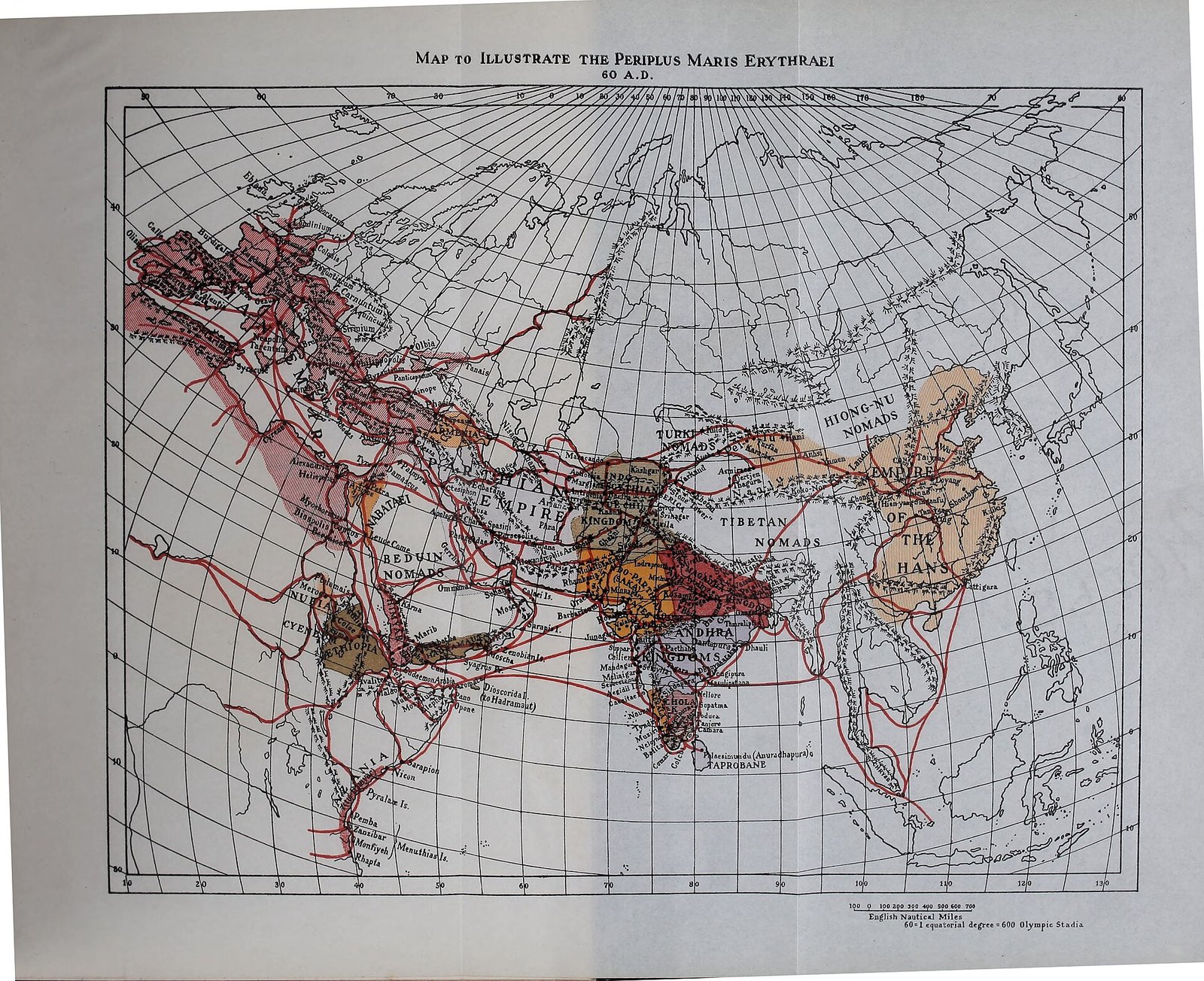
| Spread | Along the Silk Road and Indian Ocean routes |
| Replaced by | Smokeless powders in the late 19th century |
| Reading time | 10 min read |
This is a history article. It explains what gunpowder did in the past and does not give instructions for making or handling explosives.
An accident in the search for immortality
Chinese alchemists in the Tang dynasty spent centuries mixing minerals, hoping to find an elixir of life. Texts from around the 9th century warn that mixing certain substances, including saltpetre and sulfur, with other materials could cause fires and burned hands and workshops. The Chinese name huoyao, “fire medicine”, shows how its discoverers thought of it.
The three ingredients explain why it works. Saltpetre (potassium nitrate) holds a lot of oxygen. Charcoal is fuel. Sulfur makes the mixture ignite more easily. When burning, the mixture does not need air from outside, and it produces a large volume of hot gas in a tiny space. In a closed tube, that gas pushes whatever is in front of it.
From fireworks to fire lances
The first recorded military use was in 904, as incendiary projectiles. In 1044 the Song-dynasty book Wujing Zongyao (“Collection of the Most Important Military Techniques”) printed the earliest known formulas. Those mixtures contained at most half saltpetre, so they burned fiercely but were not yet true explosives.
Soldiers soon tied tubes of powder to spears. At the siege of De’an in 1132, fire lances are recorded as a defensive weapon. Replace the bamboo with a metal tube and add a stone or iron ball, and you have a hand cannon, which appears by the late 13th century.
1. A metal barrel
A short cast tube, closed at one end, is fixed to a wooden handle or pole.
2. Powder and a ball
Gunpowder goes in first, then a plug and a projectile on top.
3. A touch hole
A small hole near the closed end lets a lit match or hot coal ignite the powder.
4. Gas pushes the ball
The burning powder makes hot gas faster than it can escape, so pressure pushes the ball out of the open end.
5. Slow to reload
Early guns were inaccurate and slow. Their value was the shock and the noise, until designs improved.
How it spread
Gunpowder travelled along trade routes and in war. Muslim scholars in Syria and Egypt wrote recipes in the 13th century. Roger Bacon wrote about it in Europe in 1267, and the oldest continental European recipes come from the late 13th century. By the 14th century cannons were in use across Europe, and gunmakers learned to make “corned” powder, grains that burned more evenly and gave more power.
Try it: watch gunpowder spread
Drag the year slider. Each card lights up when that event has happened.
Here is the time gap between milestones, calculated in Python. I ran this code and the output below is real.
events = [(1044, "Wujing Zongyao prints the first formulas"),
          (1132, "Fire lance at De'an"),
          (1267, "Roger Bacon writes about it in Europe"),
          (1346, "Powder made at the Tower of London"),
          (1453, "Ottoman cannon at Constantinople"),
          (1526, "Babur's guns win at Panipat"),
          (1780, "Mysore rockets at Pollilur"),
          (1801, "Woolwich Arsenal rocket programme")]
first = events[0][0]
for year, text in events:
    print(f"{year}  (+{year-first:3d} years)  {text}")
1044 (+ 0 years) Wujing Zongyao prints the first formulas
1132 (+ 88 years) Fire lance at De'an
1267 (+223 years) Roger Bacon writes about it in Europe
1346 (+302 years) Powder made at the Tower of London
1453 (+409 years) Ottoman cannon at Constantinople
1526 (+482 years) Babur's guns win at Panipat
1780 (+736 years) Mysore rockets at Pollilur
1801 (+757 years) Woolwich Arsenal rocket programmeHow guns changed the world
- Castles lost their edge. Tall thin stone walls could be broken by cannon. Builders switched to low, thick walls and angled bastions.
- Rulers needed money. Guns and gunners were costly, so larger states with strong tax systems could afford them. Smaller powers could not.
- Armies changed. Drilled soldiers with firearms replaced many armoured knights.
- Mining and metal. Demand for saltpetre, iron and bronze grew and shaped trade routes.
India and gunpowder
Panipat, 1526
On 21 April 1526, Babur faced Ibrahim Lodi at Panipat, in present-day Haryana. Babur had about 12,000 men and 15 to 20 cannon. Lodi had an estimated 50,000 to 70,000 men and around a thousand war elephants, but no gunpowder weapons. Babur lined up about 700 wagons tied together, with musketeers firing between them and gaps for his cavalry. The noise and fire frightened the elephants and Lodi lost the battle and his life. It marked the start of Mughal rule in India.
Mysore rockets
In the late 18th century Hyder Ali and his son Tipu Sultan of Mysore used rockets with iron casings, which could hold more powder than the older cardboard or bamboo tubes and so flew farther, reportedly up to about 2 km. At the Battle of Pollilur in 1780 a stray rocket is thought to have set off a British ammunition store. After Srirangapatna fell in 1799, British troops found hundreds of launchers and thousands of rockets. Within a few years the Royal Woolwich Arsenal started a rocket programme, and William Congreve’s rockets followed. A weapon from India reached Europe in that way.
India’s space programme later used rockets for peaceful science, and ISRO has recognised the Mysore rockets as an early landmark in rocketry. See our guide on the history of space.
The end of black powder
In the late 19th century chemists made smokeless powders, such as cordite, which are stronger and give far less smoke. Alfred Nobel patented dynamite in 1867 for mining and construction. Black powder survives today in fireworks and some historical weapons.
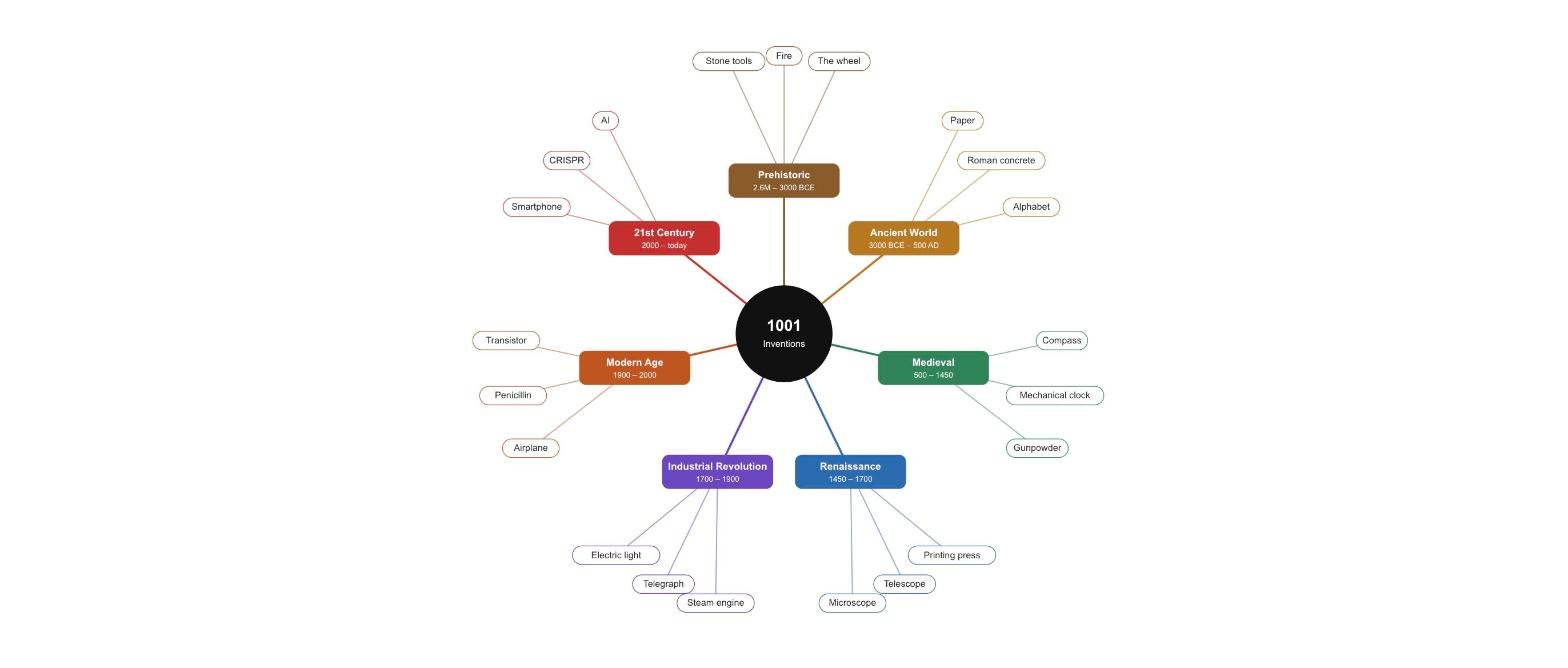
Mind map: gunpowder
- Gunpowder
- Origins
- Tang alchemists: elixir search
- Huoyao: fire medicine
- 904: first military use
- Early weapons
- Fire lance: 1132
- Hand cannon: by late 1200s
- Rockets
- Spread
- Islamic world: 13th century recipes
- Europe: Bacon 1267
- Ottoman guns: 1453
- India
- Panipat: 1526
- Mughal artillery
- Mysore rockets: 1780s
- Effects
- Bastion forts
- Large states
- Smokeless powder
- Origins
Myths worth correcting
- Myth: The Chinese only used it for fireworks. Fact: they used it in war from the early 900s.
- Myth: Guns won every battle at once. Fact: early guns were slow and inaccurate, and it took centuries to change tactics.
- Myth: Rockets came to Europe from Europe. Fact: British officers copied ideas from the Mysore rockets.
Key takeaways
- Gunpowder came out of Chinese alchemy, and the first printed formulas date from 1044.
- It spread along trade routes and reached Europe in the 13th century.
- Babur’s artillery helped him win at Panipat in 1526.
- Mysore rockets with iron casings influenced British rocket design.
- Smokeless powders replaced black powder in the late 19th century.
Frequently asked questions
Who invented gunpowder?
No single person. Chinese alchemists found it, probably in the 9th century, and later military writers refined it.
Was gunpowder used in India before Babur?
Some historians think gunpowder weapons were known in India earlier, but Babur’s use at Panipat is the best-recorded turning point.
Why is it called black powder?
Because of its dark colour from the charcoal. It is called gunpowder because of its use in guns.
Is this a how-to guide?
No. This guide covers history only.
Keep reading
Another Chinese invention that crossed Asia.Paper
How the first formulas could be written down and copied.From Sputnik to Chandrayaan
Rockets in peaceful use.The Wheel
The carts Babur tied together at Panipat.
Sources
- Gunpowder, Encyclopaedia Britannica, overview and origin
- Gunpowder, Wikipedia, timeline of early formulas and weapons
- First Battle of Panipat, Wikipedia, forces and tactics
- Mysorean rockets, Wikipedia, iron-cased rockets and the Woolwich programme
Facts were cross-checked across these pages and rewritten in our own words.