

The Invention of Farming: When Humans Stopped Wandering


For almost all of human history, nobody farmed. People moved with the seasons, gathered seeds and fruit, and hunted. Then, about 12,000 years ago, in several places that never met, people began planting seeds on purpose. That one change made villages, cities, kings, writing and taxes possible. This guide explains how it happened, how you can see it work with your own numbers, and how the same story ran again in India in the 1960s.
| Where it began | Fertile Crescent, China, Mesoamerica, the Andes, New Guinea and others, separately |
| First crops | Wheat, barley, rice, millet, maize, potatoes |
| First animals | Sheep, goats, cattle, pigs |
| Biggest effect | A food surplus, which allowed cities and specialist jobs |
| Related eras | Neolithic (New Stone Age) |
| Reading time | 10 min read |
Dates for early farming are estimates from archaeology and change as new digs report results. Where a number is rough, we say so. Yield figures in the calculator are round teaching values, not official statistics.
Life before farming
A hunter-gatherer group knew its land in great detail: where the nuts ripen in autumn, where the herds cross the river, which roots are safe. Groups were small, often a few dozen people, because wild food is spread thin. A large area feeds only a few people, so people moved on when a place was used up.
This was not a miserable life. Many foragers worked fewer hours than early farmers and ate a varied diet. What they could not do was store much food or stay in one place, so they could not build up wealth, large buildings or full-time specialists.
Why farming began, and where
About 11,700 years ago the last Ice Age ended and the climate became warmer and steadier. Wild cereals grew over wider areas and farming became a better bet. Farming appeared independently in several regions, each using the plants that grew there.
| Region | Roughly when | Main crops and animals |
|---|---|---|
| Fertile Crescent (Southwest Asia) | about 11,000 to 10,000 years ago | Wheat, barley, lentils, peas; sheep, goats, cattle, pigs |
| China (Yangtze and Yellow River) | about 9,000 years ago | Rice in the south, millet in the north; pigs |
| Mesoamerica (Mexico) | about 9,000 years ago | Maize (from teosinte), beans, squash |
| Andes (South America) | about 7,000 years ago or earlier | Potatoes, quinoa; llamas |
| New Guinea highlands | about 7,000 years ago or earlier | Taro, bananas, sugarcane |
| South Asia (Mehrgarh, Balochistan) | about 9,000 years ago | Wheat, barley; cattle, sheep, goats |
Notice the pattern: river valleys, rich soil and a plant that could be domesticated. Geography decided who started first. The Tigris and Euphrates, the Nile, the Indus and the Yellow River all gave floods that refreshed the soil each year and water that could be channelled to fields.
How a wild plant becomes a crop
Domestication was not one invention. It was slow selection over hundreds or thousands of years. Step through it below.
1. Wild grain scatters
Wild wheat and barley have brittle stems. When the grain is ripe the head breaks apart and the seeds fall to the ground. That is good for the plant, but hard to harvest.
2. Gatherers pick the exceptions
A few plants have tougher stems that keep the grain on the plant. People harvesting by hand or with a sickle collect these ones more often, because the seeds are still there at harvest time.
3. Seeds get sown again
Some of the collected grain is spilled, saved or planted. Next year more of the plants have the tough-stem trait, because those seeds were the ones brought home.
4. Choices pile up
Over many generations people also favour bigger grains, plants that ripen together, and plants that sprout fast. The crop slowly stops being able to survive without human help.
5. A crop is born
The plant now depends on people to sow and harvest it, and people depend on it for food. This two-way dependence is what historians mean by domestication.
Try it: from seed to supper
Farming only works if the harvest is bigger than the seed you must set aside. The tool below shows how many people one hectare of grain can feed, once you subtract next year seed. A person needs roughly 270 kg of grain a year if grain gave all their calories. Move the sliders.
Here is the same arithmetic in Python. I ran this code and the table is its real output.
NEED = 270   # kg of grain per person per year
SEED = 100   # kg of seed sown per hectare

cases = [("Early farmer", 500), ("Medieval field", 800),
         ("India wheat, early 1960s", 900), ("India wheat, today", 3500)]
for name, y in cases:
    surplus = y - SEED
    print(f"{name:28}{y:>8}{surplus:>8}{surplus/NEED:>8.2f}")
Case Yield kg/ha Surplus People/ha
Early farmer (primitive) 500 400 1.48
Medieval field 800 700 2.59
India wheat, early 1960s 900 800 2.96
India wheat, today 3500 3400 12.59The jump between the 1960s and today is not small. A hectare now feeds about four times as many people as it did, which is the Green Revolution in one line.
Tools and systems that made farming work
c. 9500 BCE: First crops in the Fertile Crescent
Wheat, barley and pulses are grown and saved as seed.
c. 6000 BCE: Irrigation in Mesopotamia
Canals carry river water to dry fields, so farming spreads into drier land.
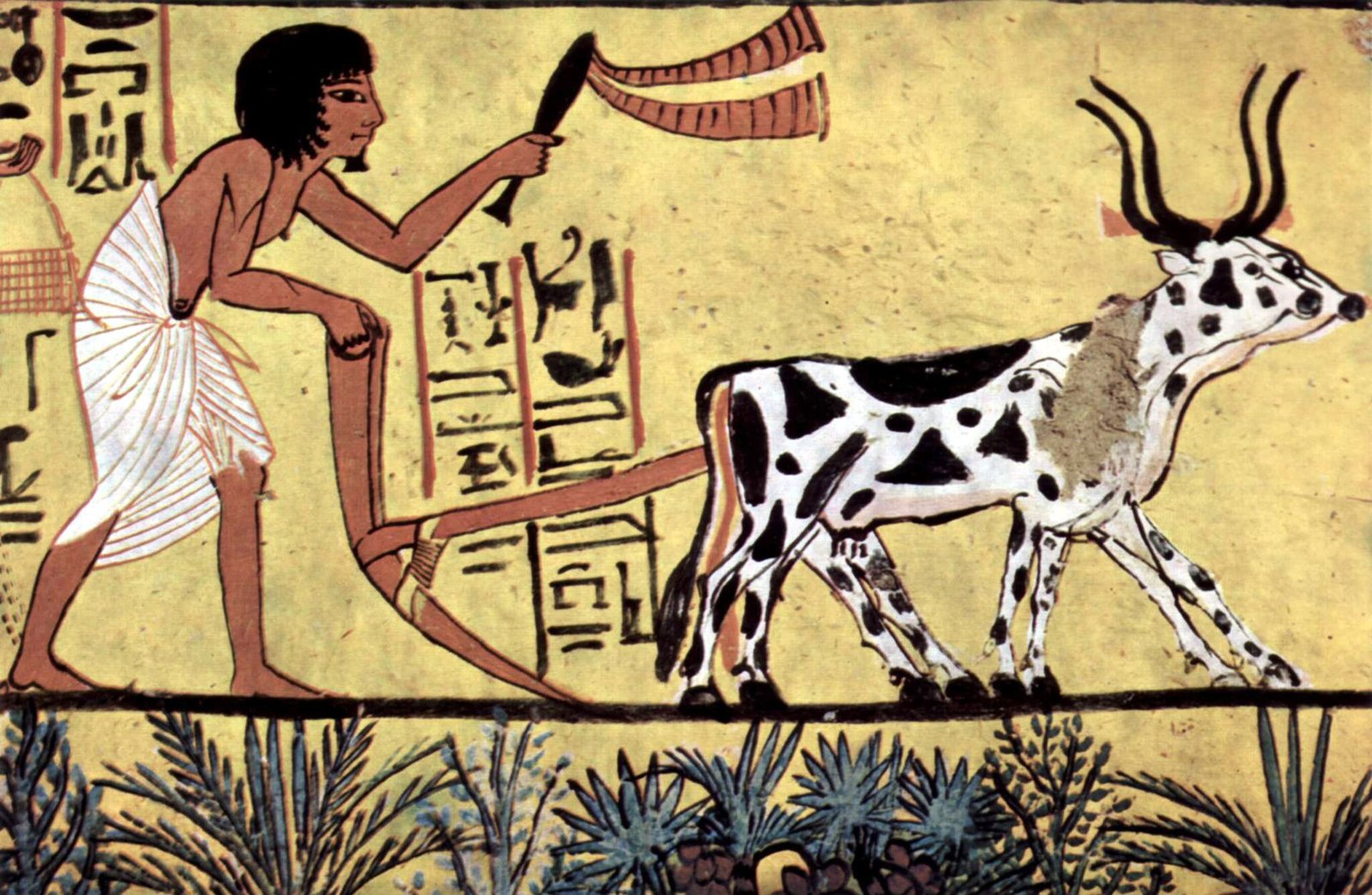
c. 4000 BCE: The ard plough
A pointed wooden tool pulled by oxen opens the soil faster than hoes.
1909 to 1913: Haber and Bosch fix nitrogen
Fritz Haber shows ammonia can be made from air, and Carl Bosch scales it up for industry.
1960s: The Green Revolution
Short, high-yield wheat and rice, with fertiliser and irrigation, raise harvests across Asia.
Three ideas keep returning: better seeds, more water, and more nutrients in the soil. Almost every later farming advance is a version of one of these.
What farming changed
- A surplus. If a farmer grows more than their family needs, others can do something else: make pots, weave, rule, write or fight.
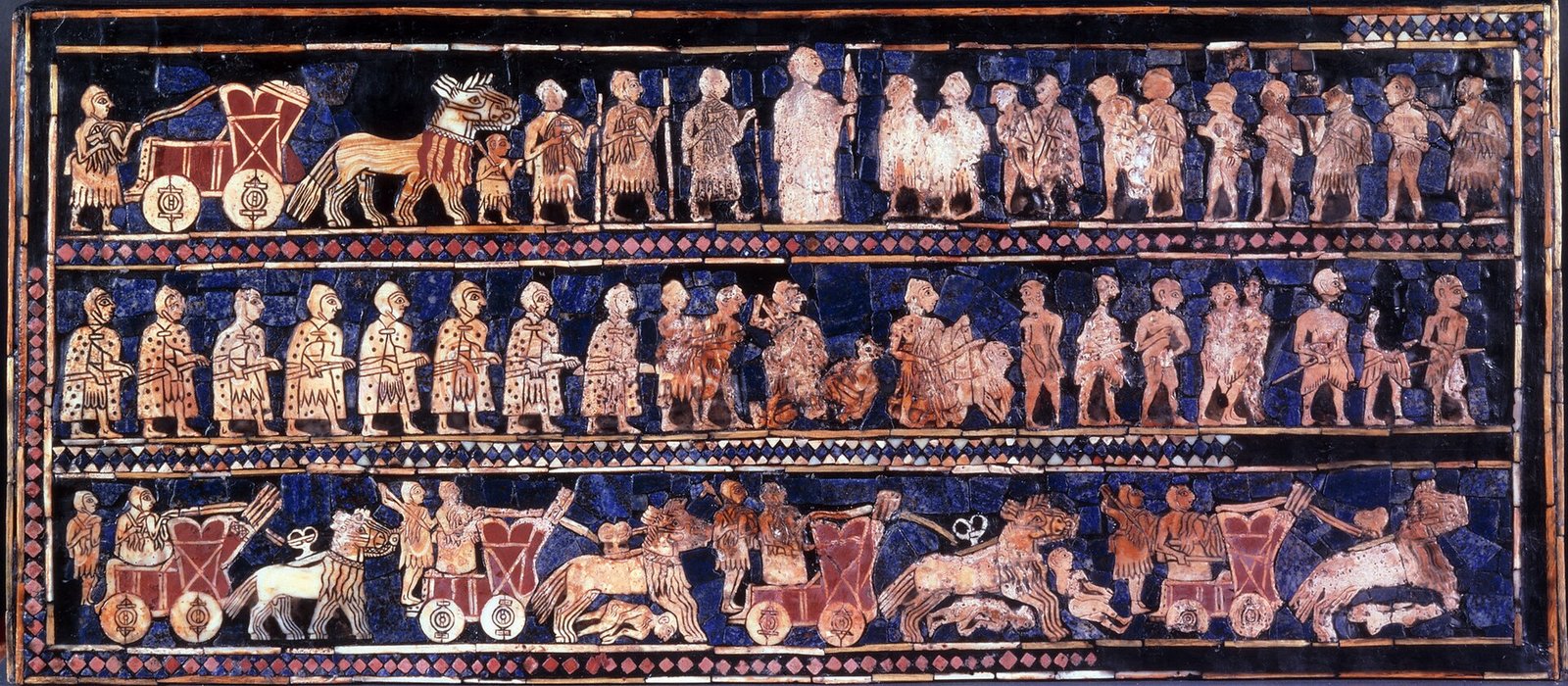
- Settled villages and cities. Fields cannot be carried, so people stay. Grain stores and tools need guarding, and that leads to organisation.
- Writing and counting. Early record keeping in Mesopotamia tracked grain and livestock. Farming is one reason writing was invented.
- Inequality. People who controlled land or stored grain gained power over those who did not.
- Health costs. Many early farmers were shorter and had more dental problems than foragers. Living close to animals and each other helped diseases spread.
India: from Mehrgarh to the Green Revolution
Farming in South Asia has a very long record. At Mehrgarh, in Balochistan at the western edge of the Indus plains, archaeologists have found signs of wheat and barley farming and cattle herding from about 9,000 years ago. Later, the Indus Valley cities grew wheat, barley and cotton, and rice farming spread across the Ganges plain and the south.
The monsoon shaped Indian farming more than any other force. Farmers built tanks, wells and canals to store the rain, and grew different crops in the kharif (monsoon) and rabi (winter) seasons. That calendar still organises rural life today.
The Green Revolution
In the early 1960s India produced only about 10 to 12 million tonnes of wheat a year and depended on imported grain. The Bengal famine of 1943, which killed over three million people, was still remembered. Scientist M. S. Swaminathan worked with the American plant breeder Norman Borlaug, who had developed short-stemmed wheat in Mexico. Short plants carry heavy grain heads without falling over and respond well to fertiliser and water.
Mexican dwarf wheat was imported and then bred into varieties suited to Indian conditions. India’s wheat output nearly doubled between 1965 and 1970, and a bumper crop in 1968 was so large that grain had to be stored in schools and cinemas. Borlaug received the Nobel Peace Prize in 1970. The revolution was strongest in Punjab, Haryana and western Uttar Pradesh.
The same methods brought problems: heavy use of fertiliser and pesticides, falling groundwater in Punjab, and soils that need more nutrients than before. Swaminathan himself warned about these effects in 1968 and later argued for an “evergreen revolution” that raises yields without damaging the land.
Fertiliser: farming’s hidden engine
Plants need nitrogen, and for most of history farmers got it from manure, rotation with beans and similar crops. The Haber-Bosch process turns nitrogen from the air into ammonia on an industrial scale. Researchers estimate that synthetic nitrogen helps feed about half of the world’s people today. That is why energy, gas and farming prices are tied together.
Mind map: the story of farming
- Farming
- Origins
- Ice Age ends: warmer, steadier climate
- Fertile Crescent: wheat, barley
- China: rice, millet
- Mesoamerica: maize
- How crops form
- Selection: tough stems, bigger grain
- Saved seed: sown again
- Dependence: plant and people
- Tools
- Sickle
- Ard plough
- Irrigation
- Fertiliser: Haber-Bosch
- Effects
- Surplus
- Cities and writing
- Inequality
- Health costs
- India
- Mehrgarh: 9,000 years ago
- Indus crops: wheat, cotton
- Monsoon seasons: kharif, rabi
- Green Revolution: 1960s
- Origins
Myths worth correcting
- Myth: Farming began in one place and spread. Fact: it began separately in several regions.
- Myth: Farmers were always better off than foragers. Fact: early farmers often had worse health, though farming supported far larger populations.
- Myth: The Green Revolution was only about new seeds. Fact: seeds worked together with fertiliser, irrigation and government support.
Key takeaways
- Farming was invented several times, independently, after the last Ice Age.
- Domestication is slow selection of plants that stay on the stem and give bigger grain.
- The key number is surplus: harvest minus seed, divided by what a person eats.
- South Asia has farmed for about 9,000 years, and India’s wheat output nearly doubled between 1965 and 1970.
- Fertiliser, seed and water together explain the modern jump in yields, and also the new problems.
Frequently asked questions
Did farming start in India?
Farming began independently in several regions. In South Asia, Mehrgarh shows wheat and barley farming about 9,000 years ago, and rice later spread across the Ganges plain.
What is a hectare?
A hectare is 10,000 square metres, roughly the size of a football pitch and a half.
Is the calculator exact?
No. It uses round values to teach the idea. Real yields vary with soil, rain, seed variety and season.
Why did early farmers become shorter?
Researchers link it to a narrower diet, more disease and years when harvests failed. Foragers ate a wider variety of foods.
Keep reading
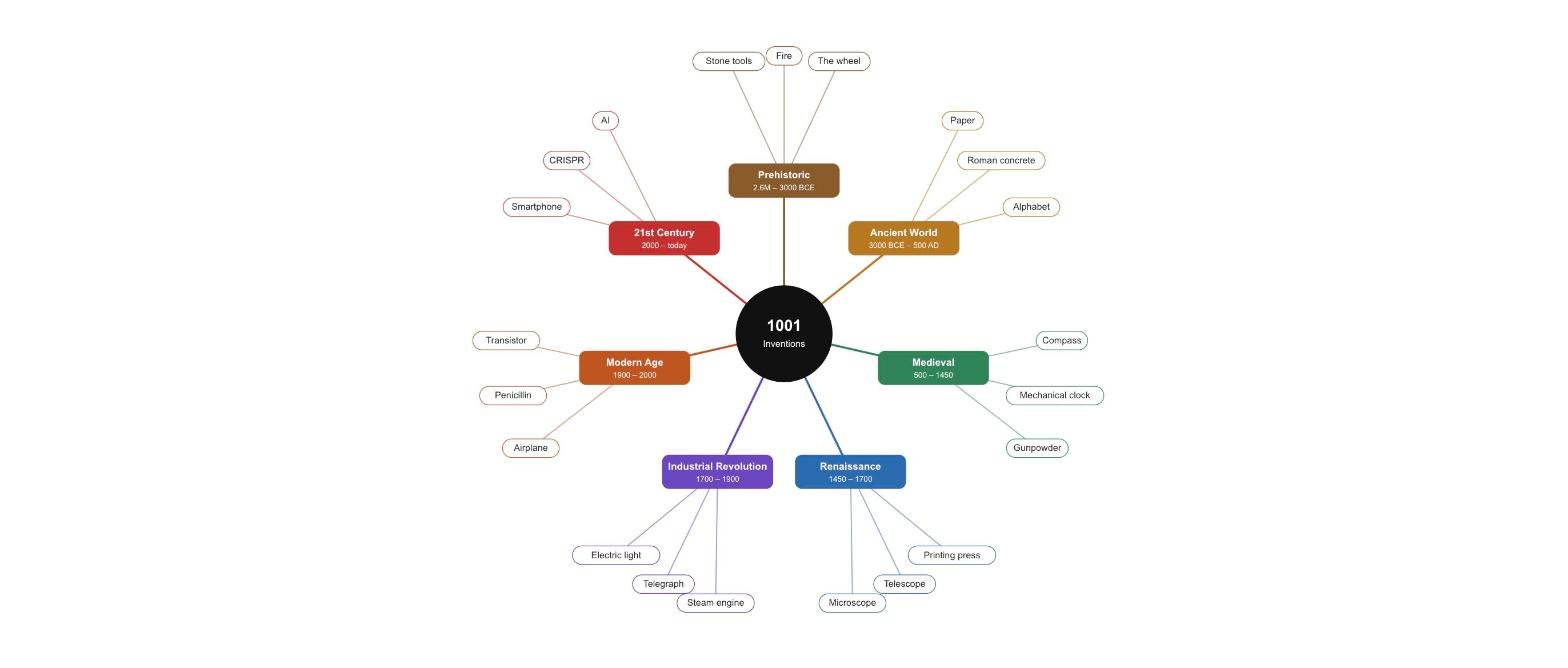
See where farming sits among all the eras.The Wheel
How transport joined the fields to the towns.Riding the Monsoon
The winds that shaped farming and trade in India.Roman Concrete
What surplus and cities could afford to build.
Sources
- Agriculture, Encyclopaedia Britannica, overview of the origins of farming
- How many people does synthetic fertilizer feed, Our World in Data, 48% estimate (Erisman and others, 2008)
- A story about M S Swaminathan and India’s Green Revolution, Finshots, Indian wheat output and the 1968 bumper crop
- Mehrgarh, Encyclopaedia Britannica, early farming in Balochistan
Figures were checked against these pages and rewritten in our own words. Yield numbers in the calculator are rounded teaching values.




2 Comments
[…] Agriculture: Farming began independently in several regions around 10,000 BCE. […]
[…] other great medical revolution.The invention of agricultureWhere crowded settlements and epidemics began.Mind map of all inventionsSee the whole story in one […]