
The Solar Cell: How Sunlight Became Electricity

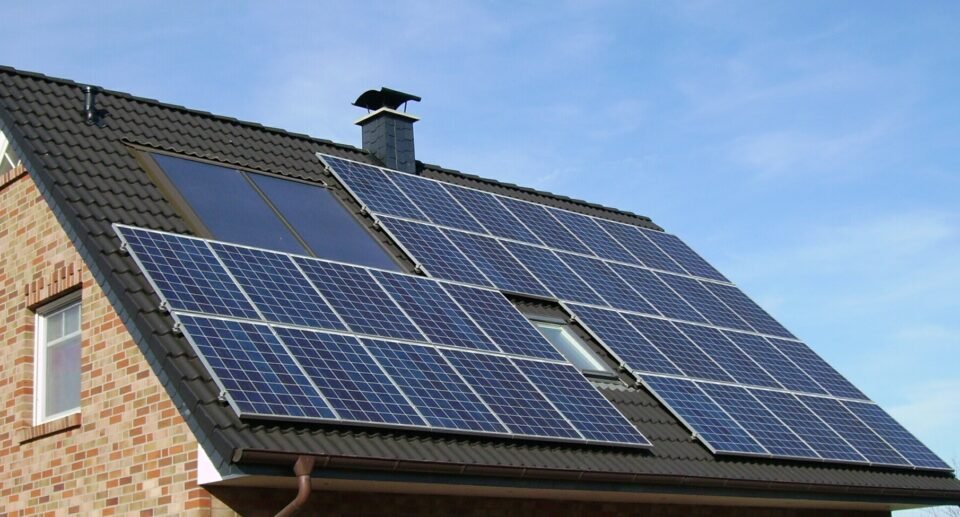
Every hour the Sun delivers more energy to Earth than humanity uses in a year. A solar cell is a thin slice of material that turns a small part of that light directly into electricity, with no moving parts. It took 115 years to go from a curious laboratory effect to a practical device, and another sixty to become the cheapest source of new electricity in many parts of the world. This guide explains how solar cells work, why they got so cheap, and how India is using them.
| Effect used | Photovoltaic effect: light knocks electrons loose in a semiconductor |
| Main material | Silicon |
| First practical silicon cell | Bell Labs, 1954, about 6 percent efficient |
| Typical panel efficiency today | Roughly 20 to 23 percent for good commercial panels |
| Theoretical single-junction limit | About 33 percent (Shockley-Queisser limit) |
| Moving parts | None |
| Reading time | 10 min read |
A 19th-century surprise
In 1839 a nineteen-year-old French physicist, Edmond Becquerel, noticed that a pair of metal plates immersed in a conducting liquid produced a bit more electric current when exposed to light. He had found the photovoltaic effect, though neither he nor anyone else knew why it happened. In 1883 the American inventor Charles Fritts coated selenium with a thin layer of gold and made what is often called the first solar cell. It converted about one percent of the light into electricity, which was not useful for much beyond a demonstration.
The explanation came with quantum theory. In 1905 Albert Einstein proposed that light consists of packets of energy, now called photons, and that each photon can knock one electron loose from a material. This earned him the 1921 Nobel Prize in Physics. The idea that light can carry its energy in discrete units turned out to be the key to solar power.
How a solar cell works
Light arrives as photons
Each photon carries a packet of energy that depends on its colour. Sunlight contains photons across the visible spectrum and beyond.
A photon frees an electron
In silicon, a photon with enough energy knocks an electron loose, leaving behind a positively charged gap called a hole.
The junction pushes them apart
The cell is made of two doped layers of silicon, n-type and p-type. Where they meet, an electric field sweeps electrons one way and holes the other.
Metal contacts collect the charge
Thin metal lines on the front and a plate on the back collect electrons, which flow through an external circuit as direct current.
An inverter makes it usable
A solar panel produces DC. An inverter converts it to AC to run household appliances or feed the grid.
Not all light becomes electricity. Photons with too little energy pass through, and photons with too much waste the extra as heat. Taking these losses into account, a single silicon junction cannot exceed about 33 percent efficiency, a limit calculated by William Shockley and Hans Queisser in 1961. Good commercial panels reach roughly 20 to 23 percent. Laboratory cells that stack layers of different materials, including silicon and perovskite, have passed 30 percent.
Try it: a rooftop solar calculator
Enter the size of a rooftop system, your area’s sunshine and your electricity price to see what it might produce and how long it might take to pay back. The defaults are illustrative values for an Indian home, so change them to match your quote and tariff.
The same calculation in Python
size_kw = 3
sun_hours = 5            # peak sun hours per day
performance = 0.8        # losses from heat, dust, wiring and the inverter
price = 8                # Rs per kWh
cost_per_kw = 55_000     # Rs, illustrative

daily = size_kw * sun_hours * performance
monthly = daily * 30
savings_year = monthly * 12 * price
payback = size_kw * cost_per_kw / savings_year

print(f"Daily output : {daily:.1f} kWh")
print(f"Monthly      : {monthly:.0f} kWh")
print(f"Savings/year : Rs {savings_year:,.0f}")
print(f"Payback      : {payback:.1f} years")
Output:
Daily output : 12.0 kWh
Monthly      : 360 kWh
Savings/year : Rs 34,560
Payback      : 4.8 years
Real systems vary with shade, tilt, local tariffs, subsidies and financing. Treat the numbers as a starting point for asking installers better questions.
From space power to rooftops
1839: Becquerel
Discovers the photovoltaic effect.
1883: Fritts’s selenium cell
About one percent efficient.
1905: Einstein
Explains light as photons that free electrons.
1954: Bell Labs
Chapin, Fuller and Pearson make the first practical silicon solar cell, around 6 percent efficient.
1958: Vanguard 1
The first solar-powered satellite keeps transmitting for years, far longer than battery-only craft.
1970s-80s: Oil crises and early rooftops
Government programmes and early adopters start to use solar on Earth.
2010: India’s National Solar Mission
Sets national targets that drive large-scale solar in India.
2015: International Solar Alliance
India and France launch the alliance at the Paris climate conference.
2023: Cheapest new power
IRENA reports solar electricity costs about 90 percent lower than in 2010.
For two decades solar cells were mainly used where nothing else worked: satellites, remote lighthouses, calculators. The turnaround came from scale. As factories, most of them in China, grew larger and more efficient, panel prices dropped by a factor of many. This pattern, in which cost falls by a roughly constant percentage every time total production doubles, is sometimes called Swanson’s law. It is the same type of curve you can see in the cost of lithium-ion batteries that power an electric car.
Solar in India
India sits in the sunbelt, with most regions receiving many hours of strong sunshine a year. The Jawaharlal Nehru National Solar Mission, launched in 2010, set the stage, and the target was raised in 2015 to 100 gigawatts of solar capacity. India reached about 100 gigawatts in early 2025. Large solar parks, such as the Bhadla Solar Park in Rajasthan, are among the biggest in the world. Cochin International Airport in Kerala became the world’s first fully solar-powered airport in 2015.
In 2015 India and France launched the International Solar Alliance, headquartered in Gurugram, to help sunny countries deploy solar. More recently, the PM Surya Ghar Muft Bijli Yojana, announced in 2024, offers subsidies for rooftop solar on homes, with a goal of reaching one crore (ten million) households. Challenges include storing midday power for the evening, grid upgrades, land for large parks and recycling old panels.
Mind map: the solar cell at a glance
- Solar cell: Turning sunlight directly into electricity.
- The science: Photovoltaic effect.
- Becquerel, 1839: Light makes a current in a liquid cell.
- Einstein, 1905: Light comes in packets called photons.
- p-n junction: Builds an electric field inside silicon.
- Efficiency limit: About 33 percent for one junction.
- Milestones: From lab to rooftops.
- Fritts, 1883: Selenium cell, about 1 percent efficient.
- Bell Labs, 1954: First practical silicon cell, about 6 percent.
- Vanguard 1, 1958: First solar-powered satellite.
- Falling costs: Why solar took off.
- Bigger factories: Mass production.
- Better cells: Efficiency up.
- About 90% cheaper: Cost of solar power fell by around nine-tenths from 2010 to 2023.
- Uses: From calculators to power stations.
- Rooftops: Homes and businesses.
- Solar parks: Gigawatt-scale plants.
- Satellites: Power in orbit.
- Off-grid: Pumps and lights.
- India: A solar-rich country.
- National Solar Mission, 2010: Sets the course.
- International Solar Alliance, 2015: Co-led with France.
- Bhadla Solar Park: One of the largest.
- PM Surya Ghar, 2024: Rooftop solar for homes.
- The science: Photovoltaic effect.
Common myths
- Myth: Solar panels need heat. They need light; high heat actually reduces efficiency slightly.
- Myth: Solar does not work on cloudy days. Output drops but does not vanish, since diffuse light still produces electricity.
- Myth: Panels take more energy to make than they produce. A panel typically repays the energy used to make it within about one to three years, and keeps producing for decades.
- Myth: Solar is always cheap for everyone. Upfront costs, financing and local rules vary, though costs have fallen a great deal.
Key takeaways
- A solar cell turns photons into electron flow using a p-n junction in silicon.
- Becquerel found the effect in 1839, Einstein explained it in 1905, and Bell Labs made it practical in 1954.
- Mass production cut solar power costs by roughly 90 percent between 2010 and 2023.
- India is a leading solar market, backed by national missions, huge solar parks and a rooftop subsidy scheme.
Frequently asked questions
How long do solar panels last?
Most come with performance warranties of 25 years or more, and output declines slowly, typically by a fraction of a percent each year.
Do panels work at night?
No. Without light there is no electricity, so systems use the grid or batteries at night.
What happens to old panels?
They can be recycled to recover glass, aluminium, silicon and some metals. Recycling capacity is growing as the first large wave of panels reaches retirement.
Is it better to sell power to the grid or store it?
It depends on local rules and tariffs. Net metering often pays better than batteries today, but battery costs are falling.
Keep exploring
Where cheap batteries and clean power meet.The transistor
Solar cells are close cousins of chips.Space flight
Where solar cells proved themselves first.
Sources
- Solar panel, Encyclopaedia Britannica
- Solar energy: electricity generation, Encyclopaedia Britannica
- Renewable Power Generation Costs in 2023, International Renewable Energy Agency
- Ministry of New and Renewable Energy, Government of India
- International Solar Alliance, International Solar Alliance
Featured image: Image: Pujanak, via Wikimedia Commons, Public domain. Calculator values are illustrative; use your own quotes and tariffs.




1 Comment
[…] their prices fell, and carmakers began to use them. The same trend is visible in our guide to the solar cell: as costs fall, new markets […]