

The Electric Car Is Older Than the Petrol Car. What Happened?

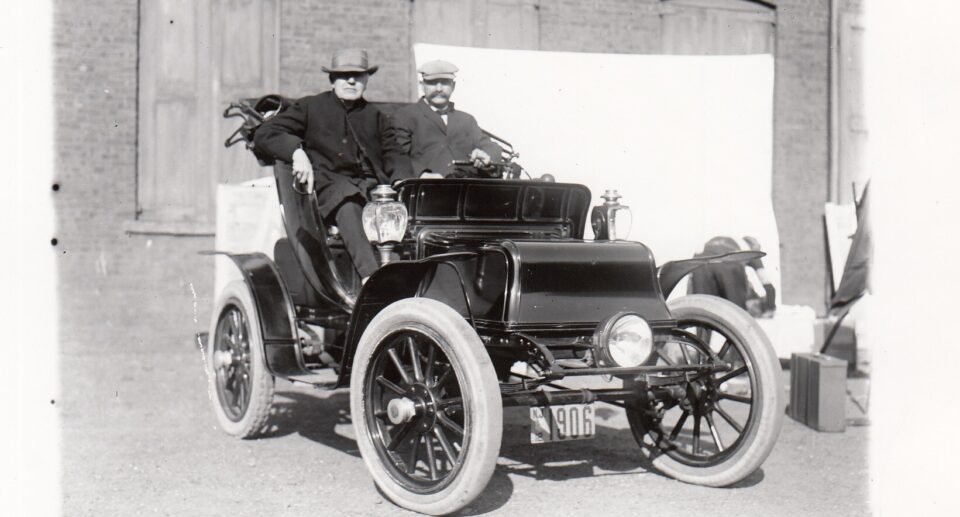
Here is a surprise: the electric car is older than the petrol car’s dominance, not newer. Electric vehicles ran on city streets before 1900, held speed records, and sold in large numbers. Then they almost vanished for nearly a century. This guide explains why they lost, why they came back, how an electric drivetrain actually works, and what it all means in India, where the most common electric vehicles are scooters and three-wheelers.
| Early electric vehicles | 1830s to 1880s, in Scotland, Hungary, the Netherlands and the USA |
| Speed record | La Jamais Contente (Belgium), 1899: over 100 km/h |
| Why they faded | Cheap petrol, mass-produced petrol cars, the electric starter and poor batteries |
| Revival | Lithium-ion batteries, 2000s onwards |
| Motor efficiency | Electric motors convert roughly 85 to 90 percent of electrical energy to motion, against about 20 to 35 percent for a typical petrol engine |
| Reading time | 10 min read |
The first electric vehicles
The first electric vehicles arrived decades before the first successful petrol car. In the 1830s inventors in Scotland, the Netherlands and the United States built small electric carriages powered by non-rechargeable batteries. They were curiosities. Everything changed when the lead-acid battery, which can be recharged, matured in the second half of the 19th century.
By the 1890s electric cars were quiet, clean and easy to start, a real advantage over the noisy, smelly, hand-cranked petrol cars of the time. In 1899, a Belgian driver, Camille Jenatzy, set a land speed record above 100 kilometres per hour in an electric car with a torpedo-shaped body called La Jamais Contente (Never Satisfied). In the United States in 1900, electric cars made up a large share of production, rivalling steam and petrol.
Why petrol won
Electric cars had one big weakness: range. Batteries were heavy, slow to charge and held little energy. Petrol, by contrast, packs a huge amount of energy into a small, light tank that can be refilled in minutes. Several events then tipped the balance toward petrol:
- Cheap fuel. New oil discoveries, such as Texas in 1901, made petrol inexpensive.
- Mass production. Henry Ford’s Model T, introduced in 1908 and produced on assembly lines, made petrol cars affordable for ordinary families.
- The electric starter. Charles Kettering’s starter, fitted to Cadillacs in 1912, removed the dangerous hand crank, which had been a major advantage for electric cars among drivers.
- Roads and distance. As roads improved, people wanted to travel beyond the reach of a battery.
How an electric car works
Battery pack
A large pack of lithium-ion cells stores energy as direct current (DC). Its size, measured in kilowatt-hours, decides the range.
Inverter
Power electronics turn the battery’s DC into alternating current (AC) whose frequency and strength can be adjusted to control the motor’s speed and torque.
Electric motor
Magnetic fields in the motor spin the rotor. Electric motors give full torque almost instantly and have very few moving parts.
Single-speed gearbox
Most electric cars need only one gear ratio, because the motor works efficiently across a wide range of speeds.
Regenerative braking
When you lift off the accelerator, the motor works as a generator and sends energy back to the battery, recovering some that would be lost as heat in conventional brakes.
Try it: running-cost calculator
Electric cars cost more to buy in many places but less to run. Enter your own numbers to see the difference. The defaults are illustrative figures, so replace them with your own fuel price and electricity tariff.
The same calculation in Python
km_per_month = 40 * 30

petrol_cost = km_per_month / 15 * 100     # 15 km/litre, Rs 100 per litre
ev_cost = km_per_month / 6 * 8            # 6 km/kWh, Rs 8 per kWh

print(f"Petrol: Rs {petrol_cost:,.0f} per month")
print(f"Electric: Rs {ev_cost:,.0f} per month")
print(f"Saving: Rs {petrol_cost - ev_cost:,.0f} per month")
Output:
Petrol: Rs 8,000 per month
Electric: Rs 1,600 per month
Saving: Rs 6,400 per month
Public fast chargers usually cost more per kWh than home charging, so the real saving depends on where you charge. And you must weigh running costs against the higher purchase price and battery lifetime.
The comeback
1830s: First electric carriages
Inventors build small battery-powered vehicles in Scotland and the United States.
1899: La Jamais Contente
Camille Jenatzy passes 100 km/h in an electric car.
1908-12: Petrol takes over
The Model T and the electric starter make petrol cars cheap and easy to use.
1996: GM EV1
General Motors leases a modern electric car in California, but later withdraws it.
1997: Toyota Prius
The first mass-produced hybrid car goes on sale in Japan.
2008: Tesla Roadster
The first production electric car to use lithium-ion battery cells.
2010: Nissan Leaf
A mass-market electric car goes on sale.
2019: Nobel Prize
John Goodenough, Stanley Whittingham and Akira Yoshino win the Chemistry prize for lithium-ion batteries.
2020s: Rapid growth
Falling battery costs and government incentives push sales up in China, Europe, the USA and India.
The revival depended on batteries. Lithium-ion cells, developed from work by Whittingham, Goodenough and Yoshino and first sold commercially by Sony in 1991, store far more energy for their weight than lead-acid batteries. As they were produced in huge numbers for phones and laptops, their prices fell, and carmakers began to use them. The same trend is visible in our guide to the solar cell: as costs fall, new markets open.
Electric vehicles in India
India’s electric story looks different from the West. Most electric vehicles on Indian roads are two-wheelers and three-wheelers, such as scooters and e-rickshaws, which need smaller, cheaper batteries. Early electric cars included the Reva, built in Bangalore from 2001. Tata Motors launched the Nexon EV in 2020, and the government has supported the shift with incentive schemes: FAME (Faster Adoption and Manufacturing of Electric Vehicles) from 2015, a second phase from 2019, and the PM E-DRIVE scheme from 2024.
Challenges include charging infrastructure, battery costs and the electricity mix, which still relies heavily on coal. Studies generally find that an electric vehicle emits less over its lifetime than a petrol one even on a coal-heavy grid, but the advantage grows as the grid gets cleaner. India is also working on domestic battery manufacturing to reduce dependence on imports.
Mind map: the electric car at a glance
- Electric car: Older than the petrol car, and back in fashion.
- Early days: 1830s to 1900.
- Crude carriages: Scotland and the USA in the 1830s.
- 1899 speed record: La Jamais Contente passes 100 km/h.
- 1900 market: Electric cars were a large share of US sales.
- Decline: 1910s to 1990s.
- Cheap petrol: Texas oil boom.
- Model T, 1908: Mass-produced petrol car.
- Electric starter, 1912: Removes the hand crank.
- Revival: 1990s to 2010s.
- GM EV1, 1996: Short-lived leased EV.
- Prius, 1997: Hybrid reaches mass market.
- Tesla Roadster, 2008: Lithium-ion sports car.
- Nissan Leaf, 2010: Mass-market EV.
- How it works: Battery, inverter, motor.
- Battery pack: Lithium-ion cells.
- Inverter: Turns DC into AC.
- Motor: Few moving parts.
- Regenerative braking: Recovers energy when slowing.
- India: Two-wheelers lead.
- Reva, 2001: An early Indian EV.
- FAME and PM E-DRIVE: Government incentives.
- E-rickshaws and scooters: Most EVs on Indian roads.
- Charging network: Still growing.
- Early days: 1830s to 1900.
Common myths
- Myth: Electric cars are a new invention. They date to the 1830s and were popular around 1900.
- Myth: Electric cars have no emissions at all. They produce no exhaust, but making batteries and generating electricity create emissions.
- Myth: Batteries die within a few years. Modern packs are designed to last many years, and makers typically offer long warranties.
- Myth: EVs are slow. Electric motors deliver torque instantly, so many accelerate quickly.
Key takeaways
- Electric cars came first; cheap petrol, mass production and the electric starter pushed them aside.
- Lithium-ion batteries, falling costs and policy have brought them back.
- An electric drivetrain is simple: battery, inverter, motor, with energy recovery when braking.
- In India, two- and three-wheelers lead, and policy support and charging are the key issues.
Frequently asked questions
How long does an EV battery last?
Many makers warrant batteries for about eight years, and packs often keep most of their capacity well beyond that, though it depends on use and climate.
Can I charge an EV at home?
Yes, with a home charger or a suitable socket, and overnight charging is the most common way to charge.
What happens to old EV batteries?
They can be reused for stationary storage or recycled to recover metals such as lithium, nickel and cobalt.
Are hybrids electric cars?
No. A hybrid has both a petrol engine and an electric motor and cannot be plugged in, while a plug-in hybrid can charge from the grid.
Keep exploring
Clean power for charging.How steam power built the modern world
Another power revolution on wheels.The wheel
Where it all began.
Sources
- Electric car, Encyclopaedia Britannica
- Automobile: early electric automobiles, Encyclopaedia Britannica
- The History of the Electric Car, U.S. Department of Energy
- The Nobel Prize in Chemistry 2019, Nobel Prize Outreach
- Ministry of Heavy Industries, Government of India
Featured image: Image: Unknown authorUnknown author, via Wikimedia Commons, Public domain. Prices and efficiency figures in the calculator are illustrative.



2 Comments
[…] keep going? Read about the wheel, the oldest idea that railways still depend on, or jump forward to the electric car to see what replaced steam on the […]
[…] For two decades solar cells were mainly used where nothing else worked: satellites, remote lighthouses, calculators. The turnaround came from scale. As factories, most of them in China, grew larger and more efficient, panel prices dropped by a factor of many. This pattern, in which cost falls by a roughly constant percentage every time total production doubles, is sometimes called Swanson’s law. It is the same type of curve you can see in the cost of lithium-ion batteries that power an electric car. […]